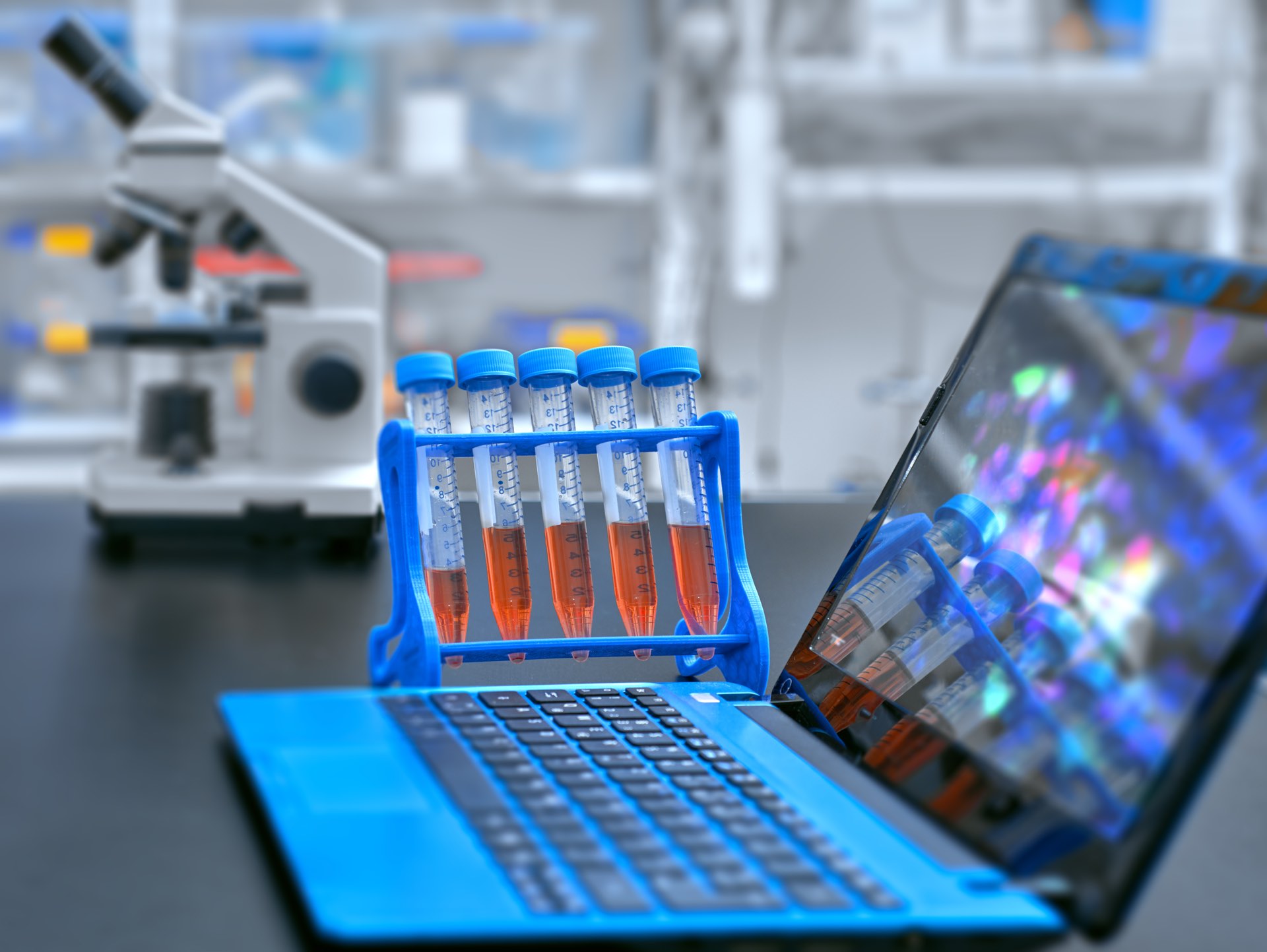
Machine learning plays a crucial role in accelerating bioink design. By analysing vast datasets of material properties and printing parameters, ML algorithms can predict optimal bioink compositions, minimizing costly and time-consuming experimentation. This allows researchers to explore a wider range of possibilities and discover novel bioinks with tailored properties.
Why Bioinks are important in research in life sciences
Bioinks are essential for 3D bioprinting, a revolutionary technique in regenerative medicine. They serve as the building blocks for creating complex tissue-like structures, providing a supportive environment for cell growth and function. These 3D-printed constructs hold immense promise for applications such as tissue engineering, drug delivery, and disease modelling, enabling researchers to study and repair damaged tissues and organs more effectively.
Machine Learning: The Catalyst in Next-Generation Bioink Engineering
The following points illustrate the key advantages of employing machine learning (ML) in the innovative field of bioink design:
- Accelerated Discovery: ML algorithms can rapidly analyse vast datasets of material properties and printing parameters, identifying optimal bioink compositions with minimal experimentation.
- Improved Efficiency: By automating the design process, ML reduces the time and resources required for bioink development, significantly improving research efficiency.
- Enhanced Prediction Accuracy: ML models can predict the behaviour of complex bioink systems with greater accuracy than traditional methods, leading to more reliable and predictable outcomes.
- Exploration of Novel Materials: ML can help researchers explore a wider range of materials and identify novel bioink candidates that may not have been considered previously.
Emerging AI Applications in Bioink Formulation
The growing demand for personalized medicine, with its emphasis on tailored treatments and regenerative therapies, is driving a strong need for bioinks and 3D-printed tissues that are precisely designed for individual patients. Concurrently, rapid advancements in AI algorithms, coupled with increasing computational power, are enabling the development of more sophisticated and accurate predictive models for bioink behaviour.
Furthermore, the inherent complexity of bioink design necessitates high-throughput screening methods to efficiently explore the vast design space. AI-powered automation provides a powerful solution for achieving this high-throughput screening, enabling researchers to rapidly evaluate a large number of potential bioink formulations.
Challenges and Solutions in Bioink Design:
- Data Scarcity: Obtaining sufficient high-quality data for training ML models can be challenging due to the complexity and variability of bioink systems.
- Solution: Collaborations between researchers and data scientists, along with the development of standardized data collection protocols, can help address this challenge.
- Model Interpretability: Understanding the underlying mechanisms driving the predictions of complex ML models can be difficult.
- Solution: Developing explainable AI techniques and incorporating domain knowledge into the model design can improve interpretability.
- Validation and Translation: Validating the performance of AI-designed bioinks in preclinical and clinical settings is crucial for successful translation to real-world applications.
- Solution: Rigorous testing and validation protocols, along with close collaboration between researchers, clinicians, and engineers, are essential for successful translation.
Outlook
Using DxTER, you can easily design formulations with the right viscosity to ensure a successful printing process, regardless of the complexity of your heterogeneous bioink compositions. This empowers you to significantly impact bioprinting research.
By streamlining the bioink development process, it will enable researchers like you to:
- Accelerate the discovery of novel and improved bioinks: Explore a wider range of material combinations and identify optimal compositions more efficiently.
- Reduce experimental costs and time: Minimize the need for expensive and time-consuming experimental trials.
- Improve the predictability and reliability of bioprinting outcomes: Enhance the accuracy and consistency of 3D-printed tissue constructs.
- Advance the field of regenerative medicine: Facilitate the development of more effective and personalized therapies for a range of diseases and conditions.
DxTER will serve as a valuable tool for researchers in the field of bioprinting and regenerative medicine, accelerating the development of innovative solutions for a wide range of biomedical applications.